
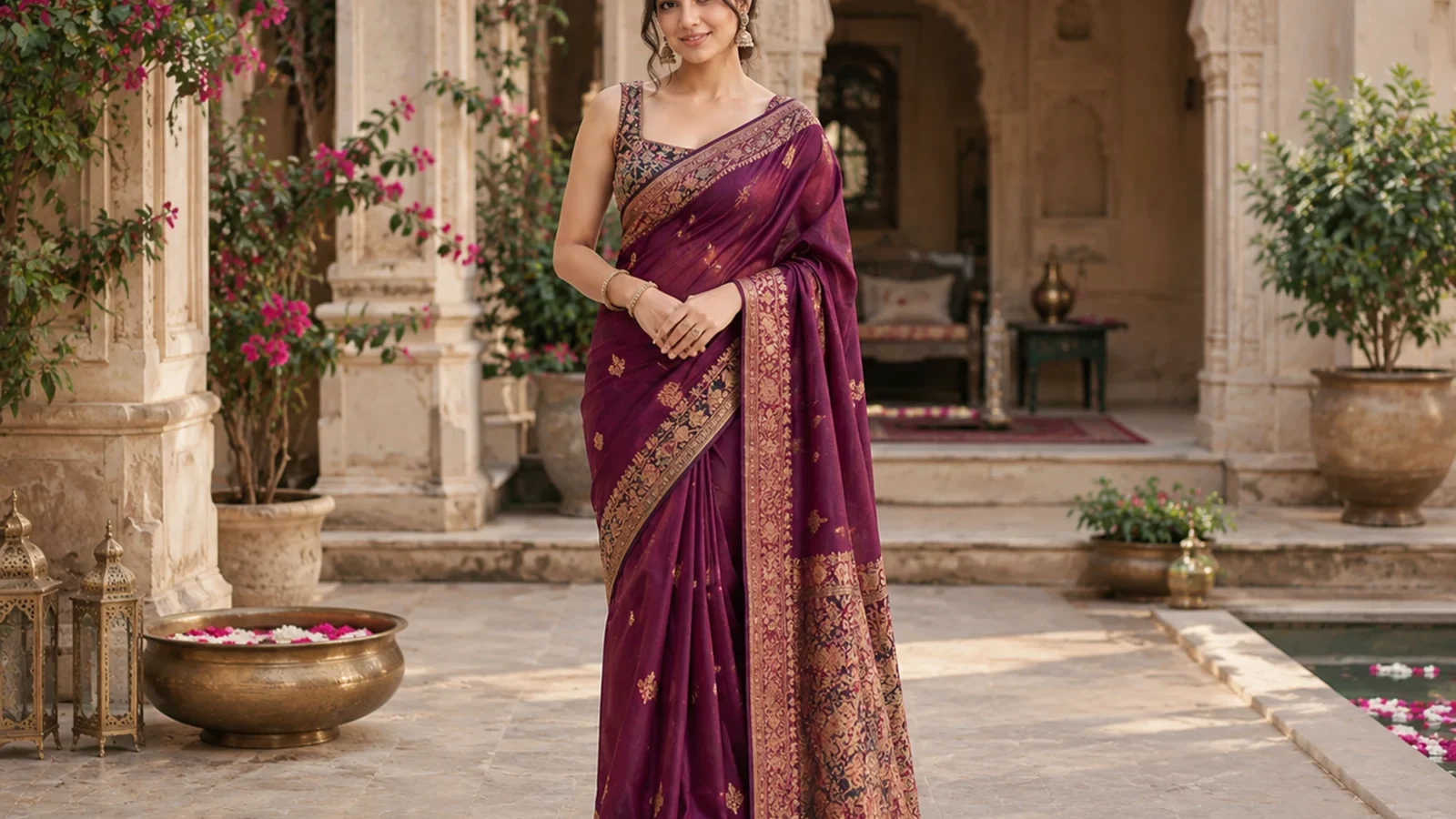

Indian fashion has always moved between heritage and change, and 2026 is no different. Today’s Indian dresses range from handwoven sarees to co-ord sets that work as well at the office as at a family function. This guide covers 15 trending Indian clothes for women, matched to the occasions they suit, with notes on fabrics, styling and designers.
One note before we start: these are trending and widely worn styles, not a scientific ranking. Popularity differs across regions, age groups and seasons, so use this list as inspiration rather than a rulebook.
What Is Trending in Indian Fashion Right Now?
Four ideas run through Indian fashion trends this year. Retailers and trend reports point to quiet luxury, a handloom revival, embroidered co-ord sets and organza as recurring themes. Comfort matters more than before, so lighter fabrics and easier silhouettes are everywhere. Craft is also being worn in new ways, with traditional embroidery and weaves on modern cuts. And Indian ethnic wear is no longer saved only for weddings; it now shows up at work, brunches and weekend outings.
15 Trending Indian Dresses and Outfits for Women
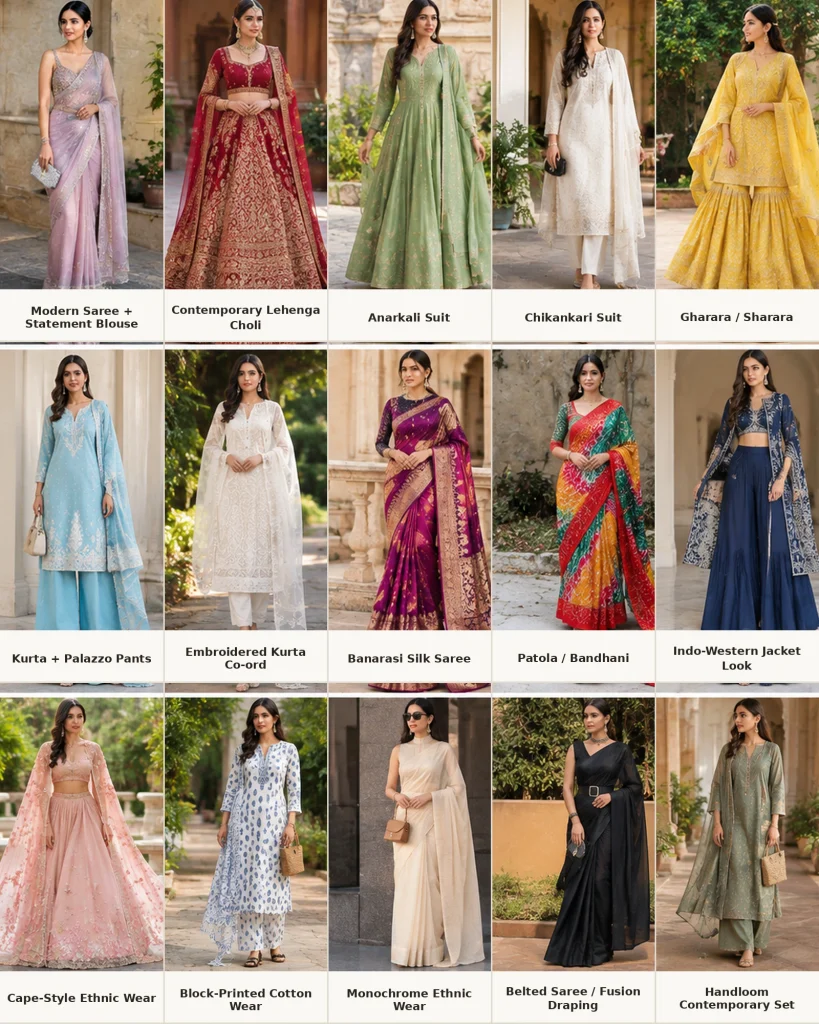
1. Modern Saree with a Statement Blouse
The saree stays at the centre of Indian traditional dress, but the blouse is where it gets modern. Corset-style, sculpted, sleeveless and embellished blouses give a classic drape a fresh look.
Best for: weddings, receptions, festivals and formal parties.
2. Contemporary Lehenga Choli
A flared or structured lehenga with a fitted blouse and dupatta remains the go-to for celebrations. Current versions lean towards lighter embroidery, softer pastels and easier-to-carry skirts.
Best for: weddings, sangeet and festive evenings.
3. Anarkali Suit
An Anarkali has a fitted bodice and a long, flared kurta, usually worn with churidar or straight trousers. Floor-length versions in rich colours suit grand occasions, while printed ones work for daytime events.
Best for: Diwali, family functions and weddings.
4. Embroidered Kurta Co-ord Set
A matching kurta and trouser set with coordinated embroidery is one of the easiest Indian outfits to wear. It needs little styling and works across several settings.
Best for: festive lunches, office celebrations and semi-formal gatherings.
5. Short Kurta with Gharara or Sharara
Both are wide, flared trousers, but they are not the same. A gharara is fitted to the knee and then flares out, while a sharara flares from the hip. Paired with a short kurta, either gives a traditional look with a lighter feel.
Best for: mehndi, haldi and festive family events.
6. Straight-Cut Kurta with Palazzo Pants
Simple, balanced and comfortable, this combination is a staple of everyday Indian wear for women. Cotton or cotton-blend fabrics keep it practical.
Best for: college, office and casual get-togethers.
7. Chikankari Suit
Chikankari is a delicate thread embroidery traditionally associated with Lucknow. On lightweight fabric in white, ivory or pastel shades, it looks refined without being heavy.
Best for: daytime events and summer wear.
8. Banarasi Silk Saree
Woven in Varanasi, Banarasi sarees are known for rich brocade patterns and zari work. Jewel tones are now being chosen alongside the traditional red and gold.
Best for: weddings, religious ceremonies and formal celebrations.
9. Patola and Bandhani Styles
Patola, a double-ikat weave from Gujarat, and Bandhani, a tie-and-dye technique, bring bold pattern and colour to sarees, dupattas and suits. They are textile traditions first and trends second.
Best for: cultural celebrations, Navratri and traditional functions.
10. Indo-Western Jacket and Ethnic Outfit
An embroidered or printed jacket layered over a kurta, skirt or blouse-and-trouser combination creates a fusion look without losing the Indian character.
Best for: cocktail events, parties and festive evenings.
11. Cape-Style Ethnic Wear
A cape over a blouse, bodysuit or lehenga adds movement and replaces the usual dupatta drape. It is a popular choice for brides’ circles and guests who want something different.
Best for: receptions and evening celebrations.
12. Block-Printed Cotton Ethnic Wear
Hand block prints on breathable cotton are practical and distinctly Indian. They are easy to wear throughout the day and suit the country’s warm climate.
Best for: everyday wear, shopping, travel and casual daytime events.
13. Minimalist Monochrome Ethnic Wear
One colour, clean tailoring and restrained embellishment define this look. It reflects the wider “quiet luxury” mood in Indian ethnic wear for women.
Best for: formal dinners, office events and understated festive dressing.
14. Belted Saree and Fusion Draping
A saree styled with a belt, a shirt or a structured blouse turns traditional draping into something contemporary. Pre-stitched and pre-draped sarees have also made the saree easier for first-time wearers.
Best for: fashion events, receptions and evening parties.
15. Handloom-Inspired Contemporary Sets
Chanderi from Madhya Pradesh, Maheshwari and other handloom-inspired fabrics are being cut into modern kurta sets, dresses and separates. They bring a textile tradition into everyday dressing.
Best for: cultural events, daytime celebrations and smart casual occasions.
Indian Outfits by Occasion: Quick Guide
| Occasion | Styles to consider |
| Weddings and receptions | Lehenga choli, Banarasi saree, cape-style wear, modern saree |
| Festivals (Diwali, Navratri, Karwa Chauth) | Anarkali, Patola/Bandhani, gharara or sharara |
| Office and daily wear | Kurta with palazzo, co-ord set, block-printed cotton |
| Summer daytime | Chikankari, block prints, handloom sets |
| Parties and evenings | Indo-western jacket, belted saree, monochrome sets |
How Indian Fashion Brands and Designers Shape These Trends
The Indian fashion brand landscape is wide. It runs from couture houses to regional handloom labels, and from large retailers to small studios working directly with weaving clusters. Fashion weeks, bridal collections and the handloom revival all influence what appears in stores a season later. Indian fashion designers tend to be known for particular strengths, such as bridal work, draping, sustainability or occasion wear, so it helps to match the designer’s style to your event rather than follow names alone.
FAQs
What are the trendy Indian outfits for 2026?
Co-ord sets, modern sarees with statement blouses, handloom-inspired kurta sets, minimalist monochrome outfits, cape-style lehengas and organza pieces are among the most visible choices. Jewel tones sit alongside soft pastels like mint and lilac.
How to look classy in Indian wear?
Choose a good fit first; tailoring matters more than embellishment. Stick to one statement element, such as heavy embroidery or a bold dupatta, and keep the rest simple. Fabrics like silk, chanderi, cotton-silk and well-finished georgette drape better and look more polished. Add accessories with restraint, and match the outfit’s formality to the occasion.
What are some popular Indian luxury brands?
Names that frequently appear in lists of leading Indian designers include Sabyasachi Mukherjee, Manish Malhotra, Tarun Tahiliani, Anita Dongre and Anamika Khanna. Abu Jani Sandeep Khosla and Ritu Kumar are also widely recognised. Sabyasachi is often associated with heritage bridal wear, Manish Malhotra with glamorous occasion wear, and Tarun Tahiliani with structured draping. Prices and availability vary, so check each label’s official channels.
What should I wear to an Indian wedding as a guest?
Pick an outfit that suits the function. Lighter pastels and florals work for daytime events like haldi and mehndi, while richer colours and heavier fabrics suit receptions and evening functions. Avoid dressing like the bride, and check the family’s dress code or colour request if there is one.
Which fabrics suit Indian summers best?
Cotton, mulmul, linen, chanderi and lightweight cotton-silk are comfortable in heat. Block prints and chikankari on light fabrics add detail without weight. Heavy silks and layered dupattas are better kept for cooler evenings and winter weddings.
Can Indian ethnic wear be worn to the office?
Yes. Kurtas with straight trousers or palazzos, co-ord sets and simple cotton or linen-blend sarees all work well. Choose subtle prints, minimal embroidery and neutral or muted colours for a professional look.
Final Thoughts
Indian fashion in 2026 works because it offers choice. You can wear a handwoven saree to a wedding, a printed co-ord set to work, or a chikankari kurta to a summer lunch and still be dressed in something distinctly Indian. Start with the occasion, pick fabrics that suit the weather, and keep the styling simple. The best Indian outfit is the one that fits well and feels like you.
