
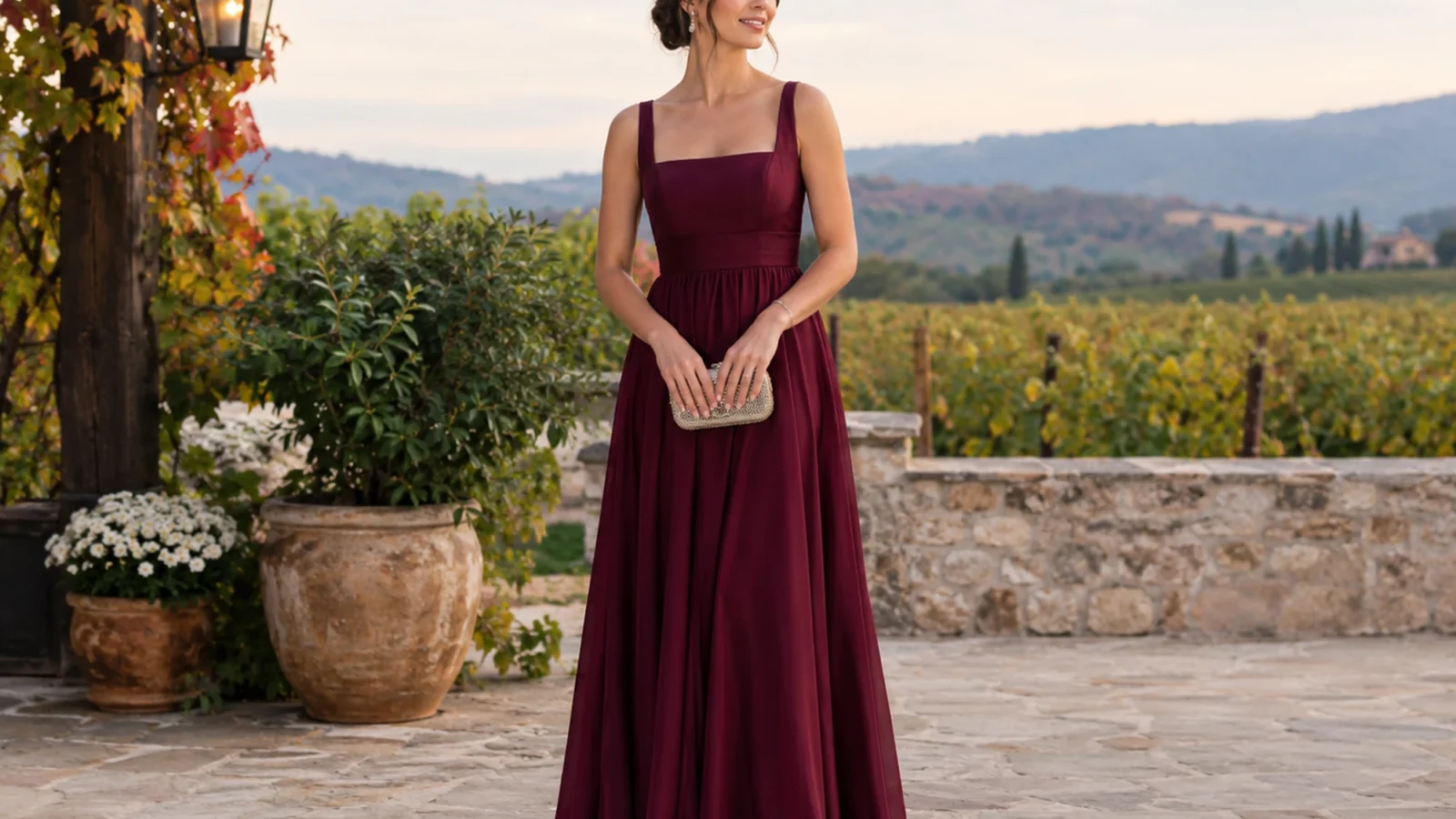

The invitation says “cocktail attire.” The venue is a vineyard in October, and the forecast says 45 degrees after sunset. Suddenly a simple question gets complicated.
This guide helps you decide what to wear. It explains the dress codes American invitations use, the silhouettes and fabrics that suit each one, and how to handle weddings, winter events and tricky details like shoes, fit and budget.
Contents
- Start with the dress code
- Pick a silhouette
- Formal dresses by length
- Wedding guest dresses
- Fabrics and dresses by season
- Colors that work
- Sizing and fit: plus-size, petite, tall, maternity and modest options
- Mother of the bride or groom
- Shoes, bags and accessories
- Buy or rent? Where to shop at every budget
- FAQ
Start with the Dress Code
The dress code, the time of day and the venue will narrow your choices faster than any trend list. Here is what each common term means.
| Dress code | What it means for women | Typical length | Example outfit |
| White tie | The most formal code, used for state dinners and certain high-society events | Floor-length ball gown | Gown with long gloves and formal jewelry |
| Black tie | Formal evening wear | Floor-length (a very elegant midi is sometimes accepted) | Silk, satin or velvet gown |
| Black tie optional | Gowns are welcome, but a dressy alternative is fine | Floor-length or formal midi | Evening gown or dressy tuxedo-style suit |
| Creative black tie | Black tie with personality | Floor-length or dressy midi | Gown with bold color, texture or a modern cut |
| Cocktail | Dressy but not gown-level | Knee-length or midi | Cocktail dress, dressy jumpsuit |
| Semi-formal | A step below cocktail | Knee-length or midi | Wrap dress, tailored dress with jacket |
| Festive attire | Cocktail dressing with a holiday or theme feel | Knee-length or midi | Velvet or metallic dress |
| Business formal | Corporate dinners and events | Tailored | Pantsuit or pencil skirt with blazer |
If the invitation is unclear, ask the host or check the event website. A midi dress in a rich fabric is the safest middle ground between cocktail and formal.
Pick a Silhouette
Global Fashion has shaped how American women dress for evening events, and five silhouettes cover most of them.
- A-line: Fitted at the bodice and widening from the waist. Comfortable for dancing and flattering on most figures.
- Sheath: A close, straight column. Works for cocktail events and dressy evening functions.
- Fit-and-flare: Fitted bodice, skirt that flares from the hip or knee. Structured but easy to move in.
- Mermaid: Fitted through the hips, flaring at the knee or below. Dramatic, best for formal evenings.
- Empire: High waist under the bust with a flowing skirt. Good for warm-weather and daytime events.
Fit matters more than price. A simply cut dress that fits well through the shoulders and waist looks more polished than a heavily embellished one that doesn’t.
How much embellishment? Match it to the room. Beading and sequins suit a ballroom at night, but can feel busy at a daytime brunch. If the dress is detailed, keep jewelry and makeup simple.
Formal Dresses for women by Length
Long dresses suit black-tie events, galas and formal evening weddings. Try the dress on with the shoes you plan to wear. A hem that pools on the floor looks careless, and one that stops above the ankle can look too short.
Short and midi dresses suit cocktail, semi-formal and many daytime events. They are easier to dance in and travel in. To give a shorter dress a sense of occasion, look for lace overlays, a sculpted waist or a statement neckline.
Formal suits and jumpsuits are a modern alternative. A satin-lapel jacket with wide-leg trousers works for black tie optional and cocktail events. Jackets should sit smoothly across the shoulders, and trousers should break correctly at the shoe.
Wedding Guest Dresses
Weddings are where most women need formal clothing, and where the rules are easiest to misread. Start with four questions:
- What time is the ceremony? Evening weddings call for dressier choices than daytime ones.
- Where is it? A church or historic hotel suggests more formality than a barn or backyard.
- What season is it? Fabric weight and hemlines should match the temperature.
- Has the couple given guidance? Many couples list colors to avoid or a dress code on their wedding website.
Colors to skip: White, ivory and cream are off-limits unless the couple asks guests to wear them. Very pale champagne and nude shades can read as white in photos, so skip those too. Blush is a gray area: a clear pink is usually fine, but a pale blush that looks nearly white in photos is not. When in doubt, choose a deeper shade.
What to wear by wedding type:
| Wedding type | What works | Practical tip |
| Black tie | Floor-length gown in satin, silk or velvet | Keep jewelry refined |
| Cocktail | Knee-length or midi dress, or dressy jumpsuit | Heels or elegant flats |
| Semi-formal | Knee-length or midi dress, dressy separates | Add a blazer or wrap for the evening |
| Garden or outdoor | Lightweight fabrics, florals, pastels or jewel tones | Block heels or wedges; stilettos sink into grass |
| Beach or destination | Flowing maxi, chic jumpsuit, dressy skirt and top | Check the evening dress code |
| Church or traditional | Covered shoulders and a modest neckline for the ceremony | Bring a shawl or jacket you can remove at the reception |
| Courthouse or small civil ceremony | Polished midi dress or dressy separates | Follow the couple’s lead on formality |
| Southern or formal estate wedding | Midi or floor-length, often with soft color and a hat or fascinator at some weddings | Check the invitation for hints |
A simple test for semi-formal weddings: would the outfit look right at a nice restaurant dinner? If yes, it probably works. If it looks like a job interview outfit, add color, texture or a standout accessory.
Ceremony versus reception: If the ceremony is conservative and the reception is relaxed, choose a dress with a removable layer, or bring a second outfit. A shawl, jacket or second pair of shoes covers most situations.
Fabrics that work well: Crepe, chiffon, lightweight jacquard and structured satin photograph well and move comfortably. Avoid anything too sheer for an afternoon ceremony, and carry a light wrap in case the reception room is cold.
Fabrics and Dresses by Season
Spring and summer: Chiffon, lightweight crepe, cotton blends and linen blends keep you cool. Florals, pastels and brighter colors suit daytime events. Choose breathable linings and avoid heavy beading in hot venues.
Fall: Satin, crepe and light jacquard in rich tones such as burgundy, olive, deep teal and burnt orange. Carry a wrap for cool evenings.
Winter: Velvet, wool crepe, heavy satin and jacquard hold their shape and look rich in candlelight. Long sleeves, high necklines and fitted bodices keep the look elegant without bulk.
Layering for cold weather:
- A tailored wool coat or structured cape looks more polished than a puffer jacket for an evening event.
- A faux fur stole or velvet shawl adds warmth and a festive touch.
- A fitted blazer over a slip dress, or a sheer long-sleeve top under a sleeveless gown, keeps the silhouette clean.
- Opaque tights in a color that matches the dress or shoes look intentional.
- Pointed-toe ankle boots, closed-toe pumps and suede booties work with winter dresses. Choose a sole with grip for icy sidewalks, and carry a second pair of shoes if you plan to dance.
Colors That Work
Color affects how a dress reads in different seasons and venues. This table covers the most popular choices.
| Color | Best for | Pairs well with | Notes |
| Black | Black tie, cocktail, evening events | Metallics, nude heels, bold lipstick | The most versatile choice. Add texture (velvet, lace) so it doesn’t feel predictable. |
| Navy | Daytime weddings, business dinners, cocktail | Gold accessories | A softer alternative to black. |
| Royal blue | Galas, evening celebrations | Silver jewelry, nude heels | Bold and photographs vividly. |
| Red and burgundy | Holiday parties, galas, winter events | Simple accessories | Deep reds suit winter, brighter reds make a stronger statement. |
| Emerald and forest green | Evening weddings, winter events | Gold jewelry | Confirm it doesn’t match the bridal party’s color. |
| Sage and olive | Spring, summer and fall weddings | Neutral or tan accessories | Soft and flattering outdoors. |
| Pink (raspberry, rose, fuchsia) | Evening parties, cocktail hours | Gold or silver | Deeper shades are safer at weddings than pale blush. |
| Gold and metallics | New Year’s Eve, holiday galas | Black clutch, simple jewelry | Best in evening light. |
| Yellow and orange | Daytime events, summer, fall weddings | Nude or tan accessories | Burnt orange and mustard work well in autumn. |
| Brown (chocolate, camel) | Fall and winter events | Gold jewelry, cream clutch | Underrated and refined in velvet or satin. |
| White | Summer galas, garden parties | Structured fabric | Not for weddings unless the couple asks for it. |
Sizing and Fit: Options for Every Body
Formal dressing works best when the dress is made for your proportions rather than altered to fit them. Search with your size in mind and read the size chart before buying.
Plus-size: Look for brands with extended sizing built into their formal collections rather than a small selection added later. Wrap styles, A-lines and fit-and-flare cuts with structured bodices tend to be forgiving. Check stretch content and lining quality.
Petite: Hem length and waist placement matter most. Midi dresses can overwhelm a short frame, so look for a hem that falls just below the knee or at the ankle with heels. Choose proportions that match your frame, such as a smaller print or a defined waist.
Tall: Look for long-length and tall-size lines, and check the length of sleeves and hems before ordering. Floor-length gowns should still clear the floor when you wear your heels.
Maternity: Stretch jersey, wrap styles and empire cuts adapt as your body changes. Choose a size with room to grow if the event is later in your pregnancy.
Modest and sleeved styles: Long sleeves, higher necklines and longer hems are widely available in formal fabrics. They are also useful for religious ceremonies, cold weather and personal preference. A sheer sleeve over a lined bodice or a coordinating jacket gives you options.
Alterations: A tailor can adjust hems, straps, waists and sleeves, and the cost varies by region and fabric. Complex fabrics and lined gowns usually cost more to alter. Plan ahead and try the dress on with your event shoes and undergarments.
Mother of the Bride or Groom, and Dressing Over 50
Mothers of the couple usually choose a dress that is elegant and coordinated with the wedding colors but not competing with the bride. Check with the couple on color before you shop.
- Daytime ceremonies: Knee-length or midi dresses with a jacket or wrap.
- Evening ceremonies: Floor-length gowns or an elegant dressy suit.
- Good fabrics: Crepe, chiffon with lining, lace with structure and satin.
- Comfort: Choose a style that supports a long day of standing, photographs and dancing, with a neckline and sleeve length you are comfortable in.
The same principles work for any woman dressing for an event where she wants polished, comfortable and age-appropriate choices. Focus on fit, fabric and structure rather than avoiding certain styles.
Shoes, Bags and Accessories
- Shoes: Match the heel to the venue. Block heels, wedges and dressy flats work for grass, gravel and cobblestones. Pumps and strappy sandals suit indoor ballrooms. Break in new shoes before the event.
- Clutch or small bag: Choose one small enough to carry through a long evening. Metallic or beaded clutches suit galas, while structured bags suit daytime events.
- Jewelry: Let the dress lead. Statement necklines work with simple earrings. Simple necklines can carry a bolder necklace.
- Wraps and jackets: A shawl, bolero or blazer adds warmth and covers shoulders for ceremonies.
- Hair and makeup: A polished updo or soft waves suit most formal events, and a classic lip or soft eye look keeps the focus on the outfit.
Buy or Rent? Where to Shop at Every Budget
Renting makes sense for a one-time event, a designer gown you wouldn’t otherwise buy, or when you want to avoid wearing the same dress to events that share the same guests. Rental services such as Rent the Runway let you try designer styles for a fraction of the retail price, and most include a backup size option. Check the return and cleaning policy.
Buying makes sense if you will wear the dress again, need alterations, or want a classic piece such as a black dress or navy midi.
Where to shop (approximate price ranges vary by season and sales):
| Budget | Where to look | What to expect |
| Under $100 | Lulus, ASOS, Amazon Fashion, department-store sale sections | Trend-led styles, lighter fabrics |
| $100 to $250 | Nordstrom, Macy’s, Dillard’s, Azazie, Reformation, Adrianna Papell | Better fabrics and linings, wide size range |
| $250 to $600 | Nordstrom designer and contemporary lines, BHLDN, Badgley Mischka, Tadashi Shoji | Higher construction quality, more formal pieces |
| $600 and up | Designer houses such as Carolina Herrera, Monique Lhuillier and Naeem Khan | Couture-level detail and fabrics |
| Rental | Rent the Runway, Nuuly | Designer styles for a short time |
For plus-size shoppers, brands such as Eloquii, Torrid and the extended-size lines at Nordstrom and Lulus are worth checking.
How to judge quality at any price: Look for clear size charts, detailed fabric descriptions, lining details and a return policy that explains exchanges and alterations. Read recent reviews for notes on fit and shipping times. For special occasions, plan six to eight weeks ahead, especially for custom sizes or overseas shipping.
Frequently Asked Questions
What is the difference between formal and semi-formal dresses?
Formal dresses are usually floor-length gowns for black-tie and white-tie events. Semi-formal dresses are knee-length or midi styles for cocktail parties, daytime weddings and dinners. When the invitation is unclear, a midi dress in a rich fabric is a safe middle ground.
What are the best formal dresses for wedding guests?
Choose a well-fitted dress in a color that is not white, ivory or cream, with a length that matches the dress code and time of day. A midi or floor-length dress suits evening weddings, and a knee-length or midi dress suits daytime ceremonies. Check the couple’s website for color and formality guidance.
Can you wear a short dress to a formal event?
Yes, depending on the dress code. A short dress is appropriate for cocktail, semi-formal and many daytime events, but not usually for black tie or white tie. Choose a dressy fabric and pair it with elegant shoes.
Can you wear black to a wedding?
Yes. Black is acceptable at most weddings today, especially evening ones. Add color, texture or jewelry to keep it festive, and check for any dress code or color guidance from the couple.
What is the difference between black tie and black tie optional?
Black tie calls for a floor-length gown. Black tie optional allows for a gown, a formal midi or a dressy suit, so you have more choice.
Should I rent or buy a formal dress?
Rent if it is a one-time event or an expensive designer style. Buy if you will wear it again or need alterations to get the right fit.
How far ahead should I shop?
Plan six to eight weeks ahead for special orders, alterations or overseas shipping. Rentals can often be booked closer to the date, but popular dates sell out.

2 comments