
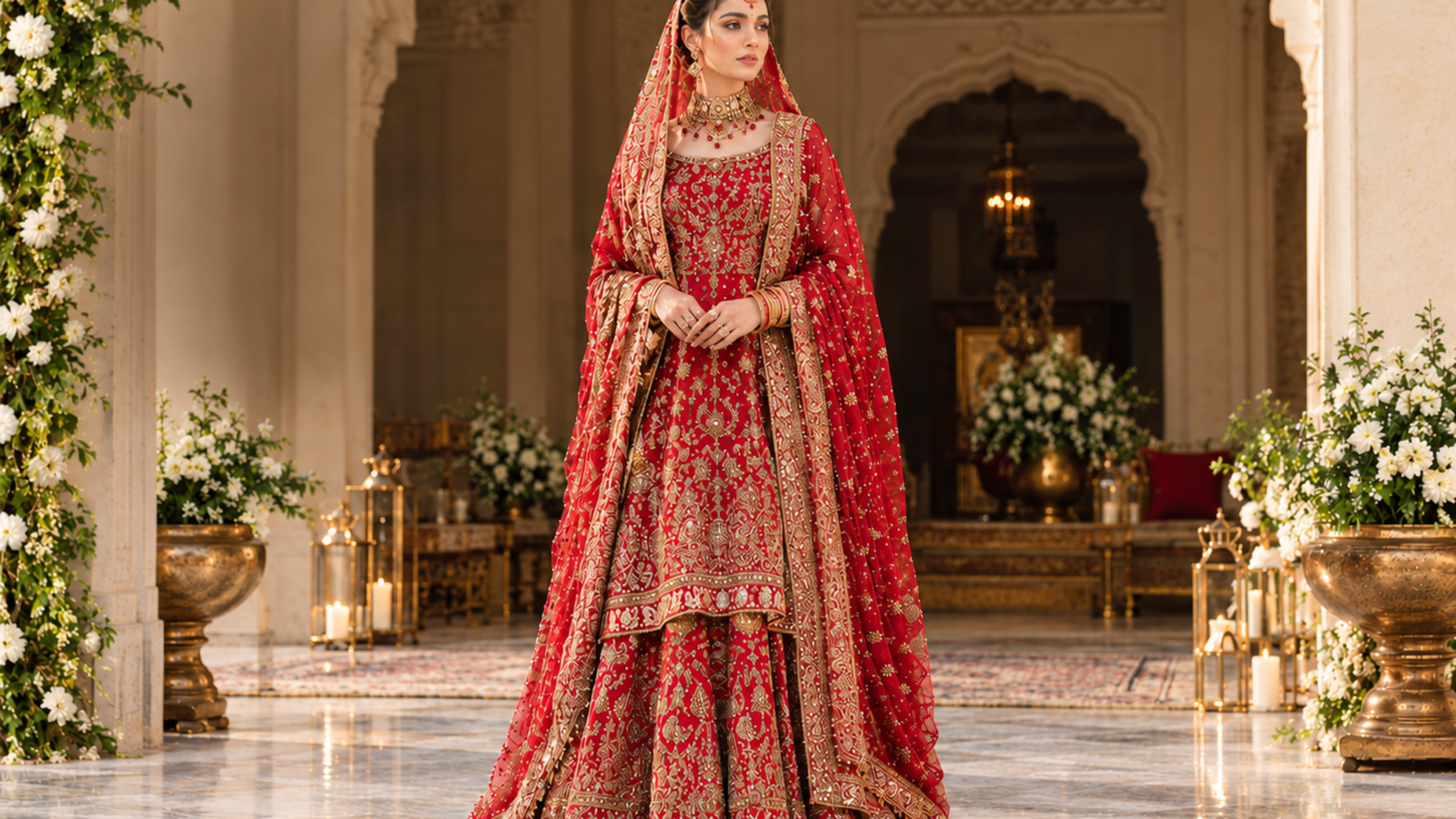

A Pakistani wedding is rarely a single event. There is usually a mehndi, a nikkah, a barat and a walima, and many brides plan a separate outfit for each.
That is why Pakistani bridal dresses are better understood as a small wardrobe than one gown. Fabric weight, handwork, ceremony and budget all shape the choice.
This guide covers the main silhouettes, the fabrics and embroidery behind them, what current collections show, and how to match a look to your function and timeline.
What sets Pakistani bridal wear apart
Pakistani bridal wear is built around heavy hand embroidery. Faiza Saqlain’s red gharara set Roushana, for example, lists dabka, marori, resham and zardozi among its techniques. Zardozi is raised metallic work.
Fabrics change the weight and finish. Raw silk, jamawar, net, organza, chiffon, tissue and velvet all appear across the bridal pages of Akbar Aslam, Faiza Saqlain, Naqshi and Aisha Imran.
Red with gold is still the classic bridal palette for the barat. Batik’s editorial points to pastels such as blush, powder blue and ivory for the walima. That split comes from how brands describe their own collections, not from sales data.
The main bridal silhouettes
Lehenga and choli
Bridal lehenga designs share one plan: a flared skirt, a fitted choli or short shirt, and a dupatta, often with a second one. The differences are in the details.
Common variations include a trailing hem, which Aisha Imran pairs with jamawar lehengas. Another is the farshi cut, where the skirt is extra long and wide so it sweeps the floor, as in Ammara Khan’s Grand Malika Farshi Bridal Lehnga. A third is a kalidar pishwas, a panelled long shirt, worn over the skirt.
Gharara and sharara
A gharara is a pair of wide trousers that fit close to the knee and flare below it, with the extra fabric gathered at a joint. A sharara is cut wide and flares more evenly down the leg. Both are worn with a shorter shirt and a dupatta.
Bridal gharara designs lean traditional. Ammara Khan lists a farshi gharara in pure jamawar worked with tilla and zardozi, and Faiza Saqlain’s Roushana pairs a chiffon shirt with a raw silk gharara and a net dupatta.
Pishwas, gowns and maxis
A pishwas is a long, flared shirt, often panelled, worn over a lehenga or gharara. Several houses also sell bridal gowns and maxis for walima or reception looks. HSY has separate Bridal Gown and Bridal Maxi pages, and Ammara Khan lists a champagne-gold reception bridal gown.
These wedding gowns borrow Western cuts but keep Pakistani handwork. A few houses list sarees too, but lehenga and gharara dominate the catalogues reviewed.
Matching the outfit to the function
Pakistani wedding dresses are usually planned function by function. The table shows habits seen in brand catalogues and editorials, not fixed rules.
For the nikkah, a wedding dress Pakistani brides pick is often lighter in colour and handwork than the barat outfit.
Fabric, weight and season
Velvet belongs to winter weddings. Faiza Saqlain, for example, keeps a separate Velvet Classics range. Organza, net and chiffon are lighter and drape differently, which matters on a long day.
Heavily worked raw silk or jamawar holds its shape but weighs more. At a fitting, sit, walk, climb a step and raise your arms before deciding.
What current collections show
These patterns repeat across 2026 brand editorials and collection pages. They are observations, not sales figures.
- Softer palettes. Pastels for daytime and walima looks appear in guides from Rangreza and Naqshi.
- Gharara and sharara returning. Saira Shakira and The Custom Suits both describe a revival of these silhouettes.
- Statement dupattas. Brand guides describe the dupatta carrying the look while the outfit itself stays lighter.
- Lighter handwork and fabrics. Naqshi describes a move toward balance over heavy layering.
Red has not gone away. Naqshi’s and Aisha Imran’s bridal pages still list many red and maroon sets. Pakistani bridal fashion is widening, not swapping red for pastel.
Region and family
There is no single Pakistani bridal look. Dress traditions vary by region, community and family, and some families have their own customs for colours or heirloom pieces. Asking elders early avoids surprises.
Couture, ready-to-wear and custom orders
Houses release a seasonal bridal collection, and the route you take affects timing more than anything else.
- Couture is made to order. A bridal dress Pakistani couture houses make to order takes months. Faiza Saqlain states 3 to 4 months of shipping time on its bridal pages.
- Ready-to-wear lines such as Naqshi’s are sold as complete stitched sets.
- Custom fit is offered by some houses; Akbar Aslam has a bridal appointments page.
Anyone looking for a bridal dress Pakistan-wide or from abroad should read each brand’s timeline and return policy first. The same applies when comparing ready-to-wear bridal dresses across brands.
How to choose, step by step
- List your functions and give each outfit its own budget.
- Work backwards from the date. Jeem suggests a final fitting about a month before the wedding.
- Try two or three silhouettes in similar fabric weight. Stylists often match flare, neckline and waistline to proportions, so a lehenga, gharara and gown can feel very different on the same person.
- Test comfort: sitting, walking, stairs, dupatta weight and pinning.
- Confirm measurements, alteration options and the return or exchange policy before paying.
Summary
Pakistani bridal fashion gives plenty of choice, but decisions follow a simple order: function first, then silhouette, fabric and timeline. Collections are moving toward softer colours and lighter handwork, while red and zardozi stay in the mix. Fixing the date and budget early makes every other choice easier.
FAQ’s
What are the most popular Pakistani bridal dress styles?
No public sales data ranks styles, so “most popular” can’t be proven. The styles that appear most across catalogues are the lehenga with choli and dupatta, the gharara or sharara, the pishwas, and the gown or maxi. Red lehengas and farshi ghararas are common for barat, while pastel pishwas and gowns appear often for nikkah and walima.
What are the latest Pakistani bridal dress trends?
Brand editorials and 2026 collections point to softer pastel palettes, a return of gharara and sharara sets, statement dupattas, and lighter fabrics such as organza and net. Red and gold remain standard for barat. These are patterns across brand pages, not measured data.
What is the difference between Pakistani and Indian bridal wear?
The silhouettes overlap. Lehenga choli, sharara and gharara are common to both countries. The differences are tendencies. Pakistani weddings centre on Islamic ceremonies such as the nikkah, walima and rukhsati, while Indian weddings follow Hindu, Sikh and other rituals. Sarees are more common in Indian bridal wear, and brand guides say Pakistani brides lean toward lighter shades for nikkah and walima and more covered cuts. Red is classic in both.
How much does a Pakistani bridal dress cost?
It depends on the house, handwork, fabric, and whether the piece is couture or ready-to-wear. These are the prices shown on the brands’ own sites in October 2026:
| Brand | Price shown on official site | Note |
| Akbar Aslam | Rs.78,000 to Rs.398,000 (“from” prices, first page of its bridal listing) | Bridal appointments available |
| Faiza Saqlain | Mostly by inquiry; Aynur listed at PKR 120,000; the red gharara bridal Roushana carries PKR 795,000 in its product data | 3 to 4 months shipping; confirm with the brand |
| Naqshi | Rs.89,990 to Rs.450,000 (Wedding Edition, ready-to-wear bridal) | Stitched sets |
| Aisha Imran | Most pieces marked “call for pricing”; the Bridals price filter spans US1,800toUS5,900 | Quoted on request |
Across these four, visible prices start near Rs.78,000 and run well past Rs.700,000 for hand-worked couture. Several brands quote many pieces only on request. Prices change often, so check the brand page before ordering. The same applies to the bridal dresses from any house.
Where can I buy Pakistani bridal dresses online?
Most houses sell through their own websites, studios or appointments.
- Couture and designer houses:
- Ready-to-wear bridal lines: Naqshi, Batik (Roshanay Bridals 2026), Jeem, Zahra Ahmad.
- Names that recur in designer listings: Elan, Maria B, Nomi Ansari, Sana Safinaz, Faraz Manan, Zainab Chottani, Mohsin Naveed Ranjha.
Searches for bridal dresses PK also return marketplaces selling “replica” pieces. Confirm authenticity on the brand’s own site or studio, and check each house’s bridal collection page for timelines and returns.
Read Blog: How a sharara differs from a gharara

1 comment