
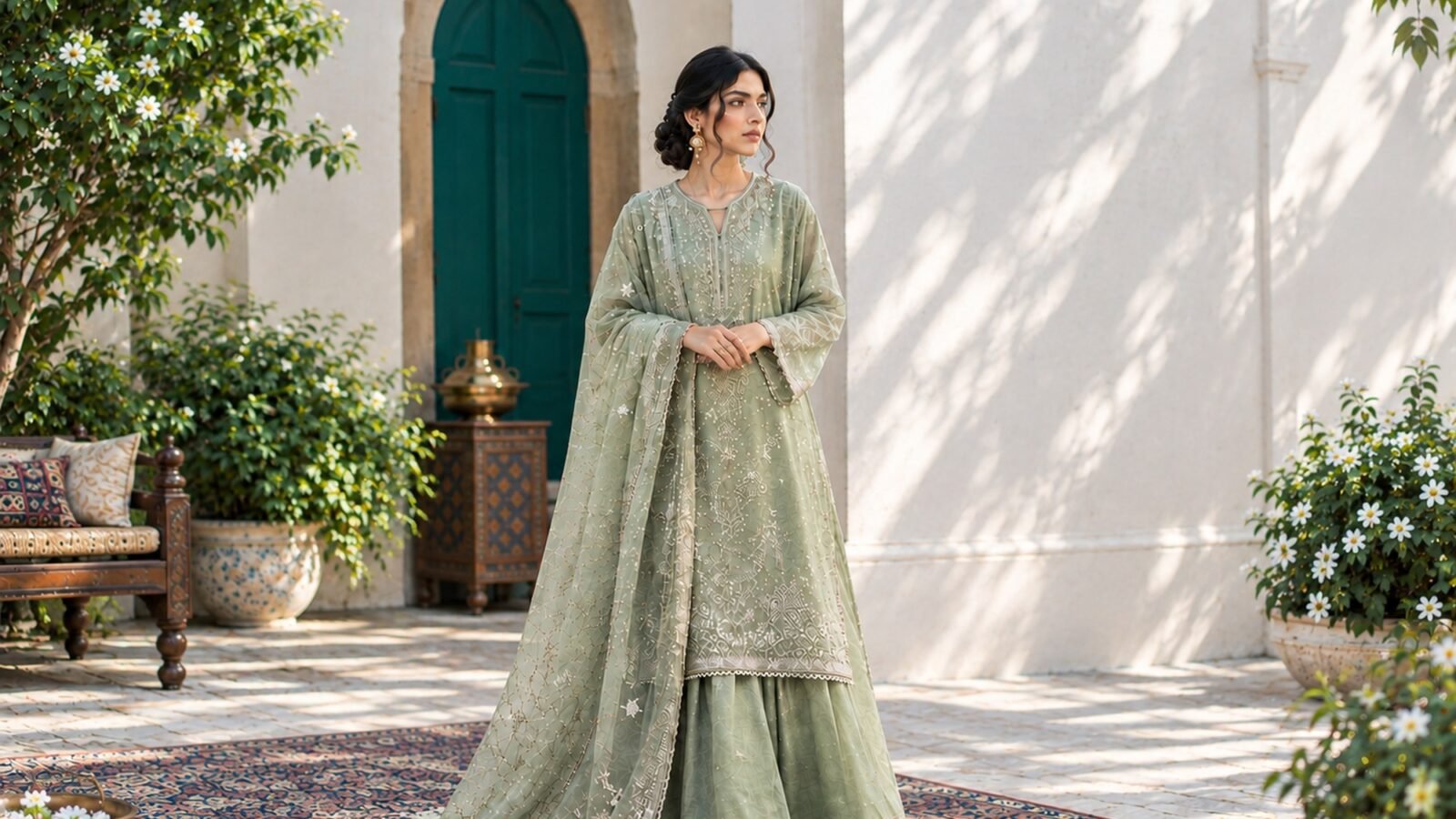

Pakistani fashion in 2026 is moving toward restraint: cleaner cuts, softer colours, and embroidery placed with intent instead of spread across every inch. The shalwar kameez is still the foundation, but how it is cut, paired and finished is changing. This guide covers the main trends in ladies fashion this year, how styles differ by occasion and season, and what to wear in everyday, formal and festive settings. It is written for readers in Pakistan, and for anyone abroad who is new to Pakistani dresses and their vocabulary.
Pakistani Fashion in 2026 at a Glance
Several themes keep appearing in this year’s collections and fashion journals:
- Understated embroidery, often in the same shade as the fabric
- The Angrakha, a wrap-front kameez
- Wide-leg trousers and lighter shararas
- Co-ord sets that now stretch from casual to semi-formal
- Softer colours such as ivory, sage and dusty rose
- Silk and raw silk in formal wear
Most published trend lists come from brands describing their own collections. Treat these themes as a direction, not as rules.
The Pieces Behind Pakistani Dresses
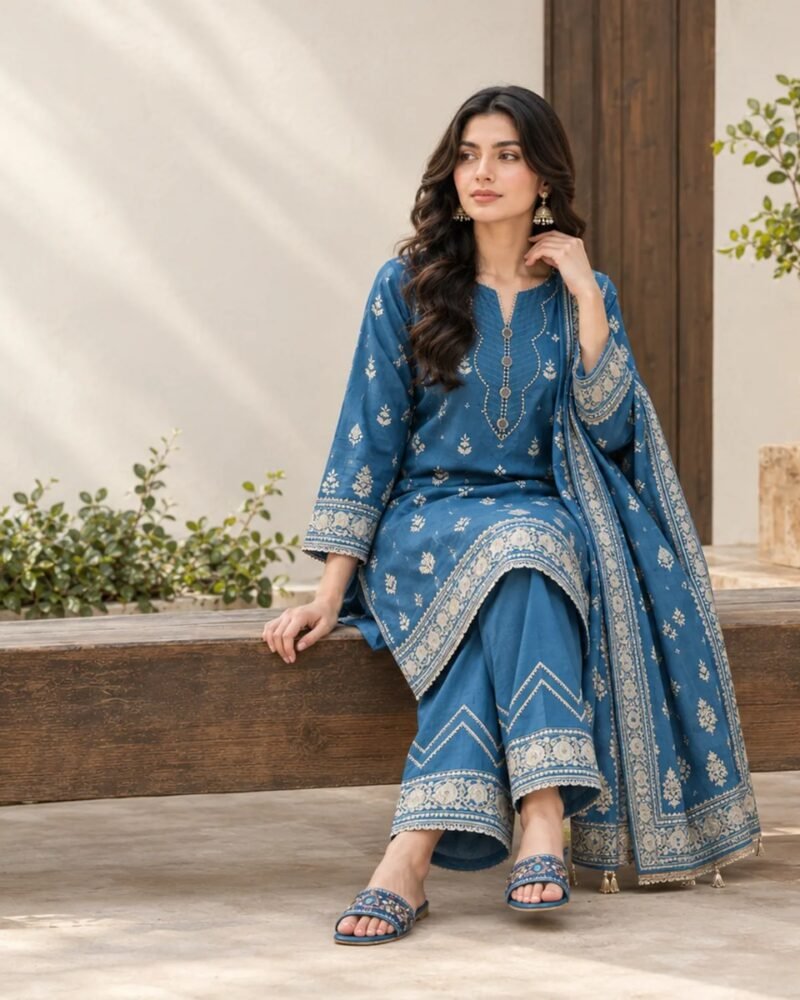
A Pakistani outfit is usually a kameez (tunic), a shalwar or trouser, and a dupatta (scarf). Sold together, they are called a three-piece suit. Women’s suits come in three formats:
- Unstitched: fabric sold as separate lengths and tailored to your measurements.
- Stitched or ready-to-wear: finished in standard sizes.
- Pret: the common Pakistani term for ready-made lines. Luxury pret adds finer fabric and embroidery.
Couture and bridal wear sit above these. The same wardrobe is listed online under many names, such as woman dresses, woman clothes, ladies dresses and women’s suits, so shop categories can look inconsistent. When browsing women’s clothing online, the format matters as much as the design.
Key Trends in Pakistani Fashion for 2026
Understated embroidery
Designers are favouring finer, more selective embellishment over dense work. Tonal embroidery is the clearest example: thread, beads and sequins match the base fabric, so the design shows through texture and light instead of contrast. Several brand editorials describe this as a “quiet luxury” approach. Dense embroidery has not disappeared, but lighter work now dominates the conversation.
The Angrakha cut
The Angrakha has an overlapping front panel that fastens at the side, often with ties or small loops. It is a long-standing South Asian silhouette, and designers are now reworking it with asymmetric hems, statement sleeves and lighter fabrics. In plain fabric it suits daytime wear, and with heavier embellishment it works for festive occasions.
Wide-leg trousers and lighter shararas
Wide-leg trousers are widely paired with straight, long kameez shirts. The sharara remains in circulation but has become softer, with chiffon, georgette and organza replacing stiff, heavily gathered versions. A practical styling point is to balance volume: a structured top usually sits better with a fluid bottom than with another voluminous piece.
Co-ord sets
Matching sets began as casual wear. In richer fabrics such as raw silk or crepe, and with restrained embroidery, they now appear at dinners and daytime events. They can also be split and worn as separates, which is part of their appeal.
Softer colour palettes
Designers are reaching for ivory, sand, sage, muted lilac, rose taupe and dusty rose. Pearl grey appears in more formal, structured pieces, and earthy shades like terracotta show up in cooler-season collections. Bright colours remain part of Pakistani dressing, but the editorial direction this year is quieter.
Silk and raw silk
Silk is being used with less ornament so the fabric can carry the outfit. Raw silk has a textured surface and natural sheen, and a well-cut piece needs little embroidery to look finished.
Fashion Styles for Women by Occasion
Occasion is the most useful way to organise fashion styles for ladies. A rough guide:
| Occasion | Common choices | Typical fabrics |
| Everyday | Printed suits, simple co-ords, long shirts with trousers | Lawn, cotton |
| Work | Two-piece stitched suits, structured shirts, subtle prints | Lawn, cotton blends |
| Dinners and gatherings | Embroidered suits, silk shirts, elevated co-ords | Silk, jacquard, chiffon |
| Weddings and festive | Embellished three-piece suits, Angrakha, sharara sets | Raw silk, organza, chiffon |
For casual dresses for women, comfort and breathability come first. Simple lawn or cotton, with a printed or lightly embroidered finish, covers most days. Trendy suits for women at work tend to be straight-cut and structured, with embellishment kept minimal.
For formal dresses for women, texture and tailoring matter more than volume. Weddings in Pakistan span several events, including nikkah, mehndi, barat and walima, and each calls for a different level of dress. Daytime functions suit lighter embroidery and softer colours, while evening events can carry heavier fabric and more detail.
Choosing Fabrics by Season
Lawn is the standard summer fabric: light, breathable and well suited to Pakistan’s heat. It also takes prints and embroidery well, which is why it appears across casual and semi-formal wear.
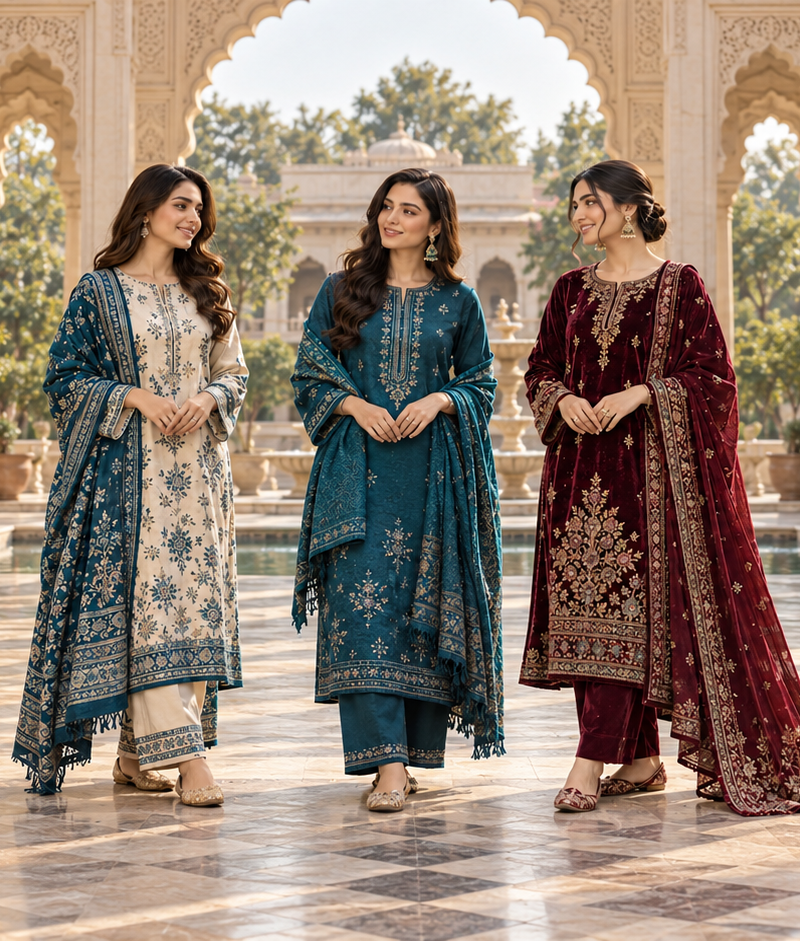
Winter dresses for women generally shift to heavier fabrics such as khaddar and velvet, often finished with a shawl. Earthy tones like terracotta and rust are reported to sit well in these textures. Silk and raw silk work year-round for formal occasions, with layers added as the weather cools.
Putting a Wardrobe Together
Trending dresses for women change faster than a wardrobe should. A steadier approach is to choose cuts and fabrics that suit you and your climate, then add one or two pieces from the current trends. A few well-made neutral pieces, such as an ivory or sage suit, go further than many trend-led purchases.
Fashion styles for women in Pakistan vary widely by city, climate, budget and personal taste. The latest styles for women are best judged by cut, fabric and how often the piece will be worn, instead of by whether it is currently being promoted.
Conclusion
Pakistani fashion in 2026 favours refinement over excess: lighter embroidery, cleaner silhouettes, softer colours and fabrics chosen for the season and occasion. Trends offer direction, but the most durable choices are the ones that fit your life and wardrobe.
FAQ
Where can I buy Pakistani dresses online?
Established Pakistani brands such as Khaadi, Sapphire, Gul Ahmed, Sana Safinaz and Maria B run official online stores, and several ship internationally. These are examples, not a ranking. Overseas, some multi-brand retailers in the US and UK also stock Pakistani labels. Before buying, check whether the stock is original or a “master copy” (a replica sold openly). Also check the size chart, return policy, and any customs duties for international orders.
What are the latest trends in Pakistani fashion for women?
Recurring themes this year include lighter and tonal embroidery, the Angrakha cut, wide-leg trousers, co-ord sets, and softer colours like ivory, sage and dusty rose. Silk and raw silk are common in formal wear. Treat these as a direction rather than a fixed rule, since they come largely from brand collections.
What is the traditional dress of Pakistani women?
The shalwar kameez, usually worn with a dupatta, is Pakistan’s traditional and national dress. Styles, colours and embroidery vary by region and community. For example, Khyber Pakhtunkhwa has its own cuts and Balochi dress is known for local embroidery.
What is the difference between unstitched, stitched and pret?
Unstitched suits are sold as fabric and tailored to your measurements. Stitched or ready-to-wear suits come finished in standard sizes. Pret is the Pakistani term for ready-made lines, and luxury pret uses finer fabrics and embroidery. Unstitched gives more control over fit, while stitched and pret saves time.
What should I wear as a guest at a Pakistani wedding?
It depends on the event and the family. Embroidered formal suits, plain silk, or a long shirt with trousers are all common choices. Daytime functions like a nikkah or mehndi suit lighter embroidery and softer colours, while evening events like a barat or walima suit richer fabric and more detail. If unsure, ask the host about the dress code.

1 comment